
_1278_559_W1476xH0.webp)
Deep-acting hydrophobic agents with silane gel
Effectiveness confirmed
Having a positive influence on the working life of concrete constructions
Taking action today for the benefit of tomorrow. Deep-acting hydrophobic agents can increase the working life not only of new structures, but also of existing buildings. This reduces the costs of a concrete construction significantly over the course of its life cycle.
Long-term studies confirm effectiveness and durability
StoCryl HG 200 provides reinforced concrete with lasting and effective protection against the ingress of water and water-soluble harmful substances. It prevents damage caused by frost, chloride penetration, and chloride-induced steel corrosion, and significantly extends the service life of the construction.
Both research results and successful practical experience over the last 15 years attest to the fact that applying deep-acting hydrophobic agents to cementitious building elements is an effective way of protecting against the ingress of aggressive substances.
A long-term study of the effectiveness of StoCryl HG 200 is available in the Technical Service Centre [German]

Hydrophobic gel forms an overlay
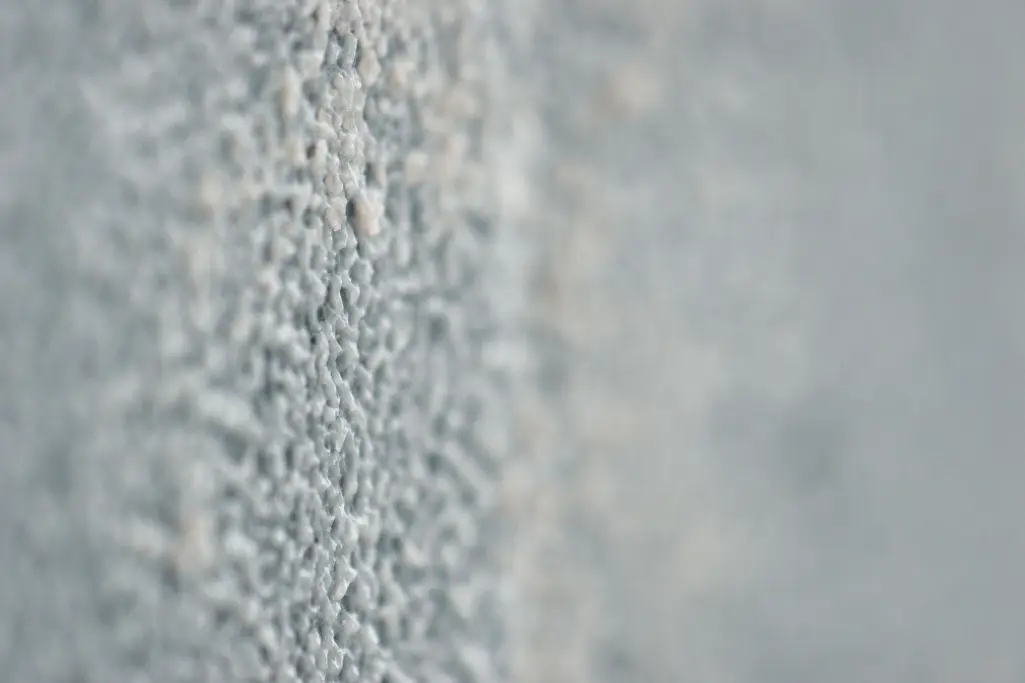
The hydrophobic gel forms a protective overlay several millimetres thick underneath the concrete surface. Compared to conventional hydrophobic impregnation, StoCryl HG 200 completely blocks the capillary absorption capacity of the porous concrete edge zone. This is made possible by the high depth of penetration of the active ingredient (around six millimetres). The concrete edge zone remains water vapour permeable.
The benefits speak for themselves
- 1.
Prevents the penetration of water
Prevents the penetration of water and harmful substances dissolved in water
- 2.
Very good depth of penetration
- 3.
High hydrophobic effect
Very high hydrophobic effect in the entire concrete edge zone
- 4.
Regulates the moisture balance
- 5.
Very high active ingredient content
- 6.
Very long contact time
Long-chain silanes and bentonite carrier material
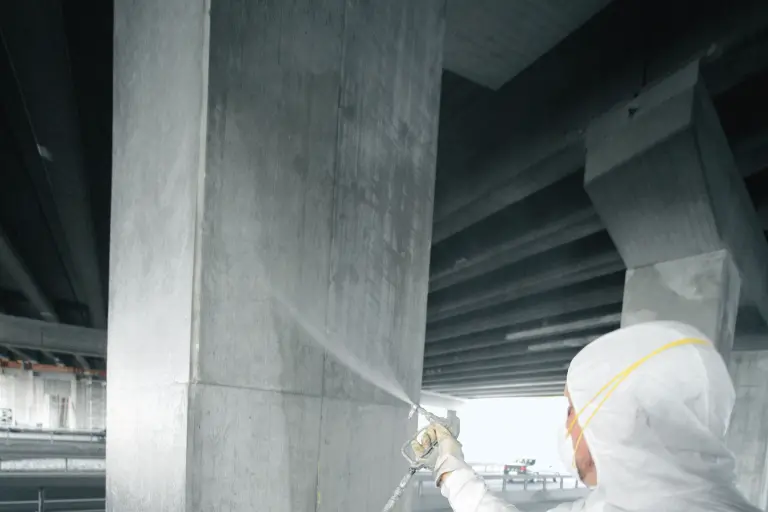
The hydrophobic gel is based on long-chain silanes and bentonite carrier material. This non-Newtonian fluid enables large amounts of material to be applied in a single application cycle. A large amount of active ingredient depot is deposited onto the building element surface. The interfacial tension between the silane and the water-logged pore wall actively transports the active ingredient into the concrete edge zone. The surface tension of the long-chain silanes changes very slowly, therefore enabling the active ingredient to penetrate the concrete edge zone over a long time and with a high depth of penetration.
Long penetration time and high depth of penetratio
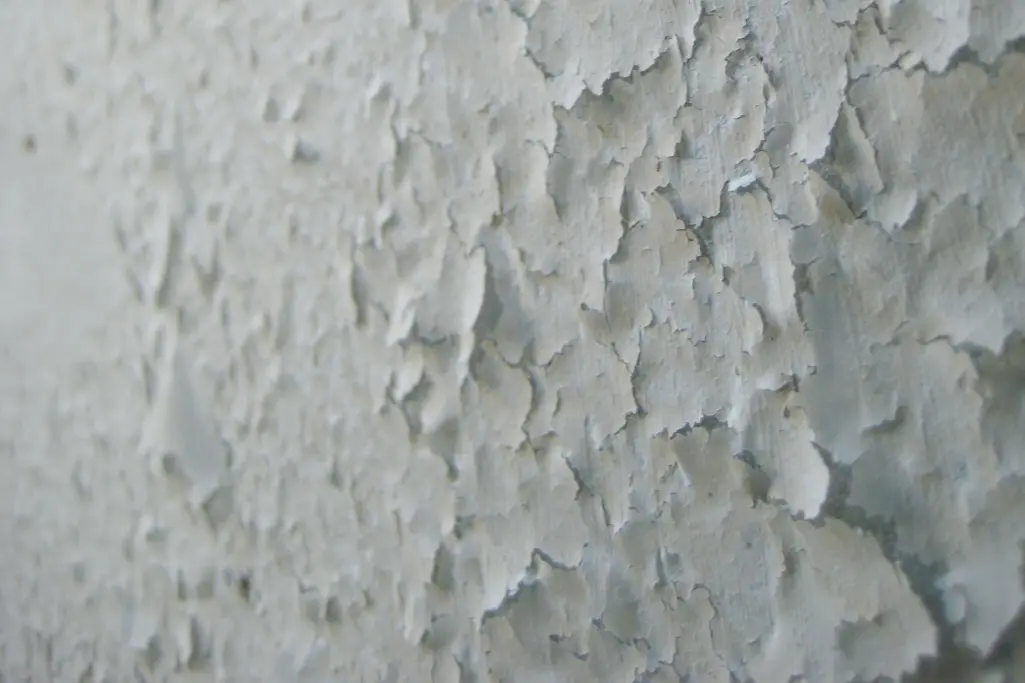
As the gel penetrates into the concrete edge zone, the silanes react with the water that condenses on the pore walls. In a further reaction step, the silanols that are formed cross-link with one another and with the hardened cement paste to form polysiloxanes. This results in a hydrophobic, chemically inseparable layer bonded to the cement, which prevents capillary absorption.
StoCryl HG 200 deep-acting hydrophobic agent is a component of the StoConcrete Protect Hydrophobic system.
_2400_1600_1_W1025xH0.webp)
StoConcrete Protect Hydrophobic
StoCryl HG 200 system component
| System products | Product description | Depth of penetration in accordance with EN 1504-2 |
|---|---|---|
| StoCryl HG 200 | Impregnation, hydrophobic, gel-like | class II |
| StoCryl HC 100 | Impregnation, hydrophobic, paste-form | class II |
| StoCryl HP 100 | Impregnation, hydrophobic | class I |
| StoCryl GW 100 | Impregnation, hydrophobic | class I |
_2400_1600_1_W768xH0.webp)

Field test confirms effectiveness
A field test carried out within the sphere of influence of the motorway authority for South Bavaria (Autobahndirektion Bayern Süd) has confirmed that the StoCryl HG 200 deep-acting hydrophobic agent provides highly effective, long-lasting concrete protection. For the purpose of the test, the deep-acting hydrophobic agent was applied to particularly exposed elements of eight existing bridges. Over a period of 15 years, studies were undertaken into:
∙ Active ingredient profile of the deep-acting hydrophobic agent
∙ Chloride penetration
∙ Carbonation speed
Their results show that the depth of chloride penetration was virtually unchanged. The carbonation speed slowed down. Water absorption continues to be prevented.
Conclusion:
The deep-acting hydrophobic agent remains just as effective after 15 years and is preventing chloride from being absorbed into the concrete. The chloride front does not reach the reinforcing steel. In addition, the deep-acting hydrophobic agent slows down the carbonation speed. A sufficiently high depth of penetration is required in order to ensure effectiveness. The field test proves that deep-acting hydrophobic agents are a effective way of extending the service life of concrete constructions without requiring repairs. Extensive studies on Swedish constructions indicate that deep-acting hydrophobic agents have a working life of up to 25 years.
Information material for StoCryl HG 200 available to download
StoCryl HG 200 – deep-acting hydrophobic agent: Preventive surface protection for concrete constructions
StoCryl HG 200 – Repairing, reinforcing, and protecting bridges and tunnels