
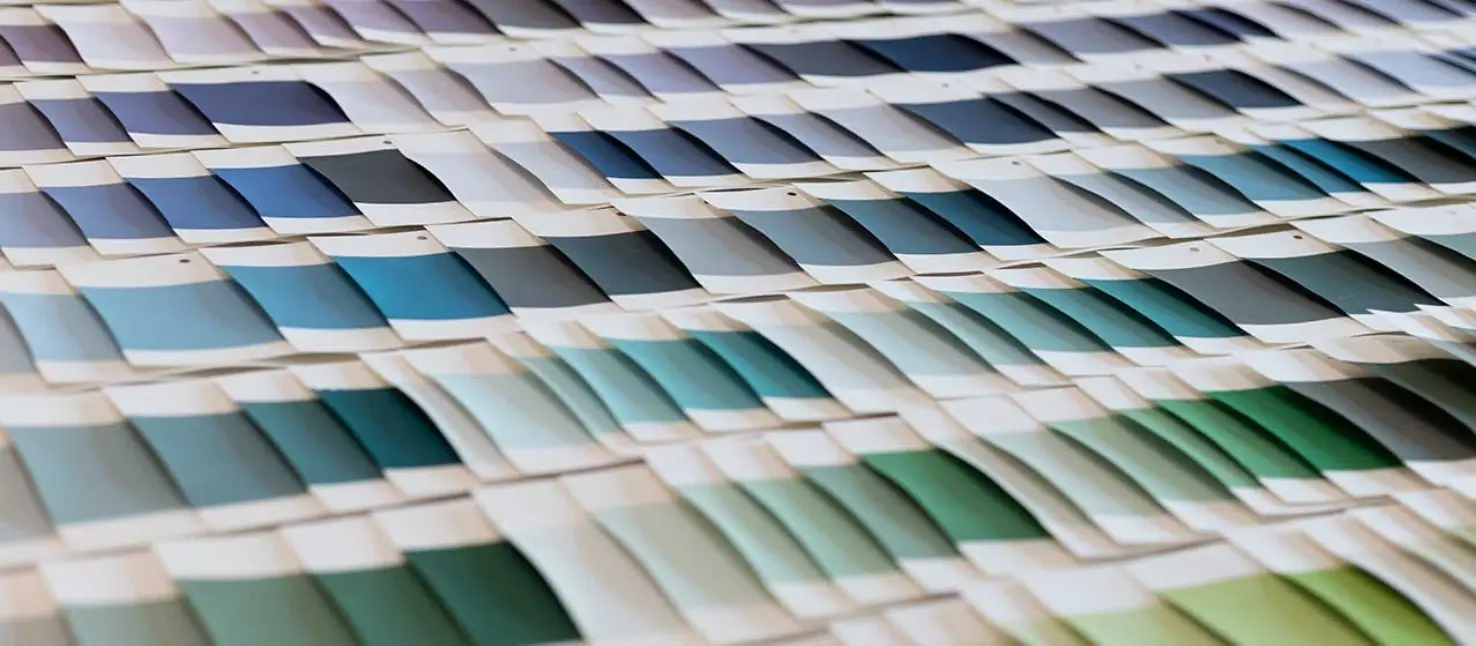
Sto-Farbtonkollektionen
Für eine perfekte Farbgebung
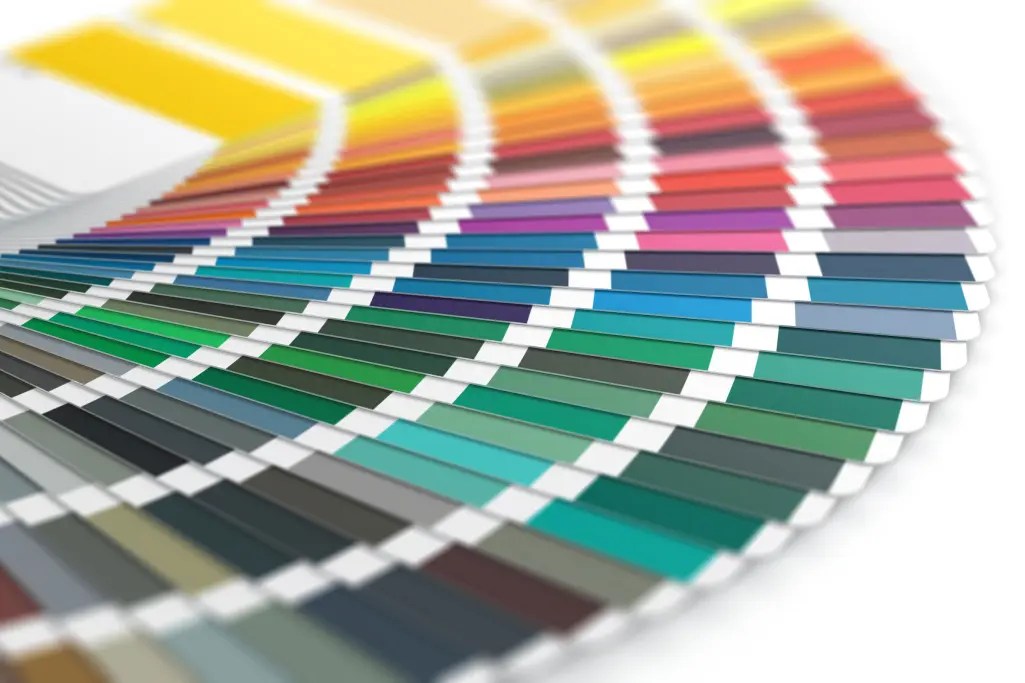
Unsere Farbkollektionen unterstützen Sie bei Ihren Projekten und helfen Ihnen, genau die Farbkombination zu finden, nach der Sie suchen – auf dem Boden, an der Fassade sowie im Innenraum. Lassen Sie sich inspirieren und lernen Sie die Farbtöne des RAL-Farbtonfächers | PDF 0,1 MB, das StoColor System, die AC - Architectural Colours - Kollektion und andere Farbtonkollektionen kennen.
Tönbar nach RAL-Farbtonfächer
Viele unserer Produkte können direkt vor Ort im Sto Verkaufscenter getönt werden.
Um schnell auf Ihre Wünsche reagieren zu können, halten wir für zahlreiche Produkte ausgewählte Lagerfarbtöne, vor allem nach RAL-Farbtonkarte (Grautöne) vor. Sollten Sie einen besonderen Farbwunsch haben, sind viele unserer Produkte direkt an den Sto-Standorten nach Ihren Vorgaben tönbar. Das spart Zeit, Geld und erspart Ihnen langes Warten.
Wir haben die RAL-Farbtöne in Preisgruppen eingeteilt. Sie gelten vorwiegend für StoPox- und StoPur-Produkte sowie StoCryl BF 200 / StoCryl BF 700.
In welche Preisgruppe (11 oder 12) Ihr Wunschfarbton fällt, sehen Sie hier. Die Zuschläge sind übrigens in den Listenpreisen bereits einkalkuliert. Weitere Farbtöne (RAL-, NCS-, MusterFarbtöne, andere) werden je nach Farbintensität diesen beiden Preisgruppen zugeordnet.
Unsere Farbtonkollektionen
Metrisches Farbsystem für die Architektur
Das neue StoColor System - über 1400 Farbtöne in einem Farbsystem
72 Basisfarbtöne. Unzählige Möglichkeiten für die Gestaltung – mit 1000 Farbtönen für Fassaden, 225 Innenraum- und über 200 Lack- und Holzlasurtönen. Mit dem neuen StoColor System verleihen Sie Ihren Ideen Leben – präzise und ästhetisch.
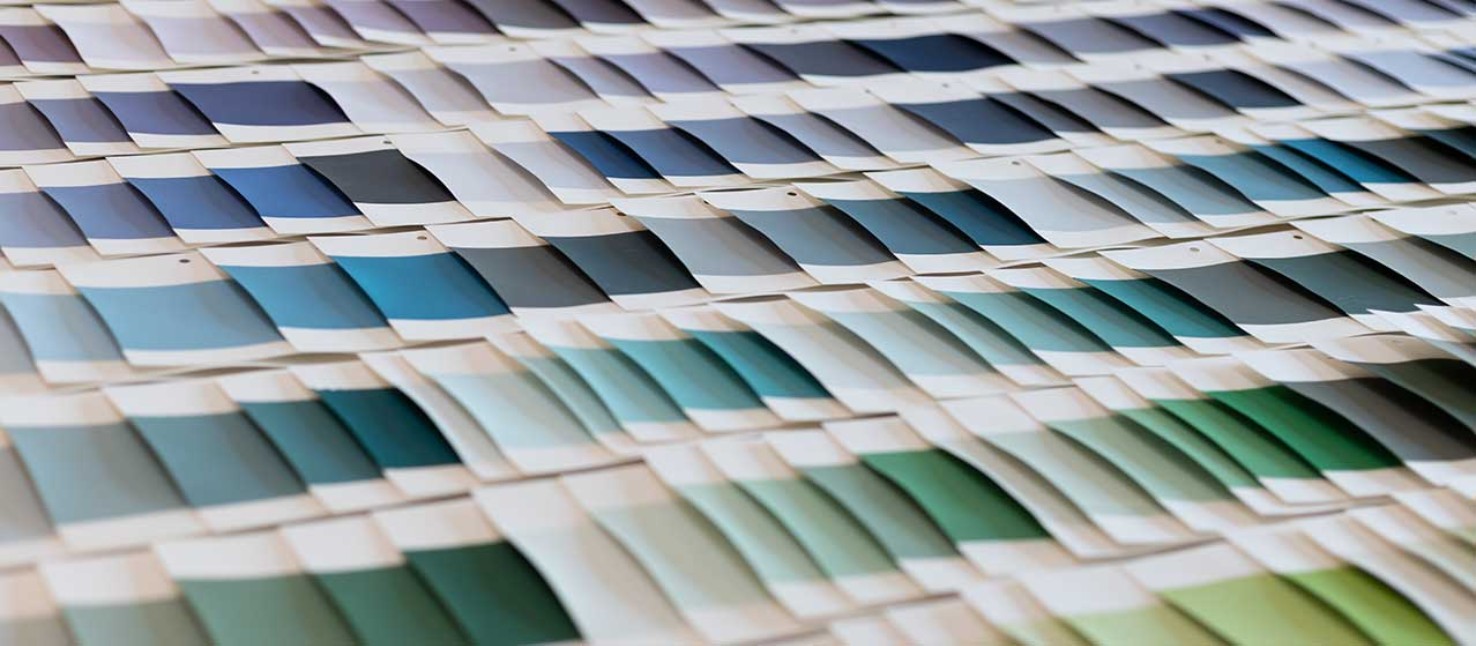
1000 neue Farbtöne – unendliche Möglichkeiten
Das neue metrische StoColor System bietet Ihnen maximale Kompositionsmöglichkeiten für die architektonische Gestaltung. Die Basis bildet ein Farbkreis mit 72 Farbtonbereichen. Schöpfen Sie aus einer systematischen Vorauswahl an Farbtönen und beleben Sie Ihre Ideen mit dem neuen Farbsystem: anwenderbezogen, präzise und ästhetisch.
Aus Liebe zum Bauen. Bewusst bauen.

StoColor System – das ist alles drin:
- 1000 neue Farbtöne für die Fassade
- Alle Farbtöne machbar in den Produkten StoColor Maxicryl und StoColor Dryonic
- Großes Plus an weiteren Farbtönen
- 225 Farbtöne für den Innenraum, über 200 Lacktöne, 38 Holzlasurfarbtöne
- Weißtöne
- 24 Weißtöne: natürliche Weiß- und Cremenuancen
- Schwarztöne und neutrale Graureihe
- 6 Schwarztöne, neutrale Graureihe mit 16 Abstufungen
- Trendige Graureihen mit nur 3 % Chroma
- 8 farbige Graureihen mit jeweils 6 Farbtönen, insgesamt 48 Nuancen
- 72 historische Farbtöne
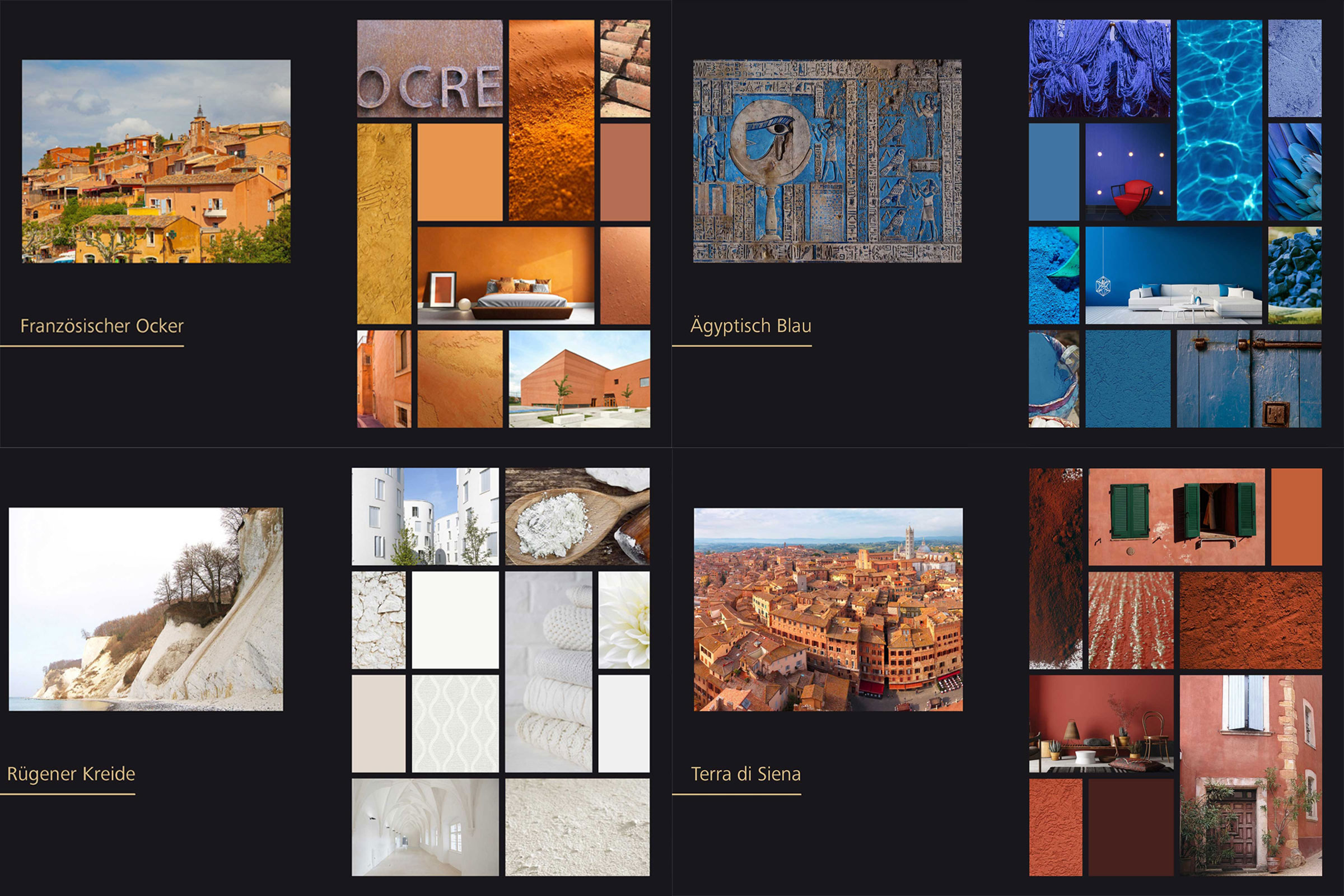
- Zum Beispiel: Französischer Ocker, Rügener Kreide, Ägyptisch Blau ...
Farbtonübersichten als Download
"Weil Farben unsere Leidenschaft sind"
Peter Appenzeller und Antonio Romano sind verantwortlich für das neue StoColor System. Drei Fragen an die Entwickler des Systems:
Warum wurde ein neues Farbsystem entwickelt?
"Wir wollten ein System entwickeln, das über bestehende Farbsysteme hinaus einen deutlichen Nutzen in der Anwendung bietet: Mit einer intelligenten Systematik, die den Nutzern „Rezepte“ für die Komposition von Farbtönen zur Verfügung stellt. Wir zeigen Wege auf, wie man zu diesen individuellen Rezepten kommt. Die Basis bilden ein fein abgestimmter Farbkreis mit 72 Farbtonbereichen und eine systematische Vorauswahl von Farbtönen innerhalb der einzelnen Farbtonbereiche."
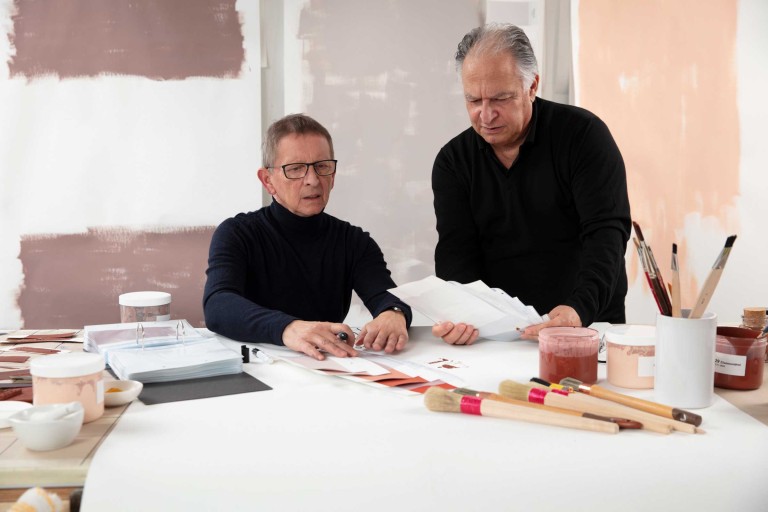
Zentrale Fragen zum StoColor System
Was sind die inhaltlichen Besonderheiten?
"Zum einen der konzeptionelle Ansatz: Das StoColor System ist gesamtheitlich und langfristig gedacht. Und natürlich das Gesamtkonzept mit der ganzen Vielfalt, die der Anwender bekommt: 1000 Farbtöne für die Fassade, 225 Farbtöne speziell für Innenräume und weiter 240 Lack- und Lasurfarbtöne. Plus historisch oder kulturell wichtige Farbtöne. Eine echte Besonderheit sind auch die Beratungsmedien. So ist es möglich, mit nur einem Werkzeug ein komplettes Projekt zu gestalten!"
Wie funktioniert das StoColor System?
"Das StoColor System ist aus der Anwendung heraus gedacht. Es gibt den analytisch denkenden Typen. Für ihn sind Abstufungen in Helligkeit und Sättigung der richtige Weg für das passende Rezept. Der emotionale Typ nutzt die Farbfächer aus der praktischen Anwendung heraus. Wir haben uns die Freiheit genommen, innerhalb des methodisch aufgebauten Systems Farbnuancen und Kompositionen hervorzuheben."

Historische Farbtöne im System
Alabasterweiß, Rügener Kreide, Französischer Ocker, Ägyptisch Blau, Englisch Rot oder Terra di Siena. Der Bezug zur kulturellen und gestalterischen Vergangenheit ist in der Arbeit mit Farbe elementar. Der ideelle Wert dieser Farbtöne bleibt auch losgelöst von der Herstellung des ursprünglichen Farbstoffes aus natürlichen Rohstoffen bestehen. Um die kulturelle Tradition dieser Farbtöne fortzuführen, beinhaltet das neue StoColor System 72 historisch relevante sowie materialbezogene Farbtöne.
Broschüre als Download
Aufbau und Farbsystematik
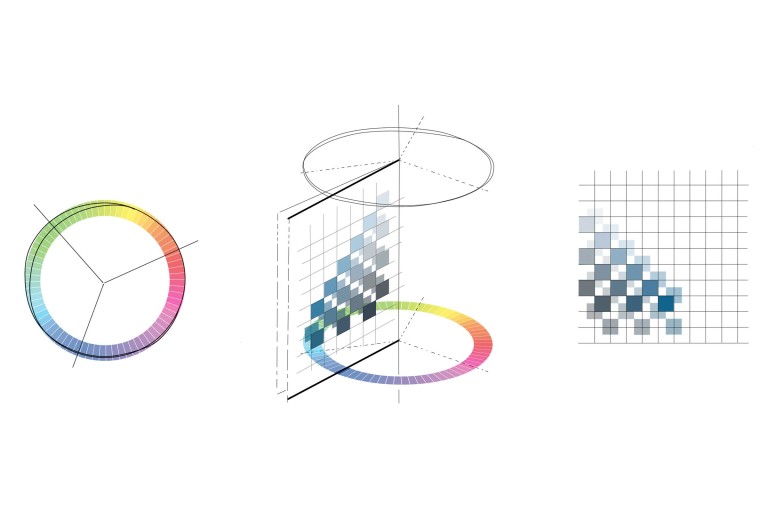
Ein sehr fein abgestufter Farbkreis bildet die Basis des neuen Farbsystems. Er umfasst 72 Farbtonbereiche – ausgehend von den drei Primärfarben Gelb, Rot und Blau. Gestalten Sie individuelle Kompositionen. Eine gezielte Auswahl an Farbtönen je Farbtonbereich unterstützt Sie dabei.
Im neuen StoColor System ist die Position von Farbtönen im dreidimensionalen Farbraum präzise definiert. Und zwar über die Parameter Farbton, Helligkeit und Chroma. Das Farbsystem gliedert den Farbkreis in geringerem Abstand von nur 5 Grad in 72 Farbtonbereiche. Ein großer Vorteil gegenüber anderen metrischen Systemen. Das bedeutet für sie in der Praxis: Sehr fein nuancierte Kompositionen von Farbtönen mit geringen Farbtonunterschieden sind möglich.
Farbtöne direkt benachbarter Farbtonbereiche weisen zusätzlich einen bewussten Versatz von Helligkeit und Chroma auf und ergänzen sich somit optimal.
Von der Theorie zur Anwendung
Die Anwendung von Farbe im städtebaulichen Kontext muss auf eine langfristige Gültigkeit abzielen. Das neue StoColor System ermöglicht es Ihnen, Ihre Konzeptideen zu verwirklichen. Von der Entwicklung der spezifischen Kompositionen bis zur Umsetzung in verschiedene Fassadenmaterialien.
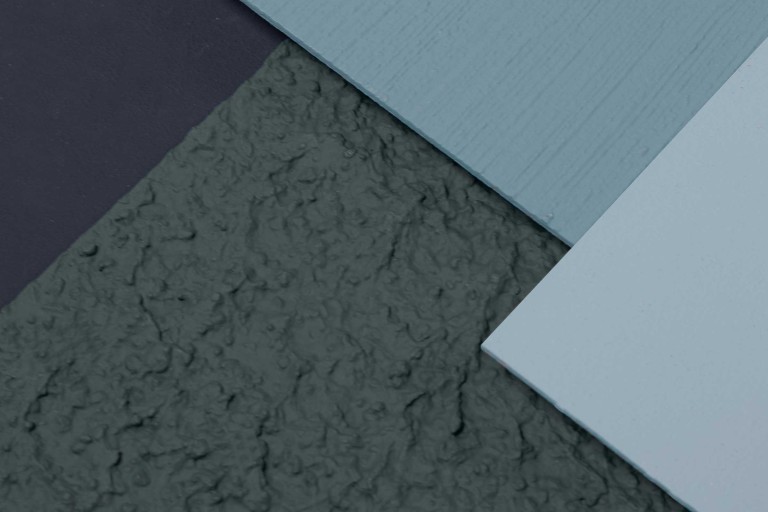
Gute Konzepte zeichnen sich durch die Planung und Steuerung der Farbwirkung aus. Textur und Schattenwurf oder verschiedene Glanzgrade verändern die ästhetische Wirkung sowie die Wahrnehmung des Farbtones selbst. Dies betrifft Farbton, Helligkeit und Chroma. Entscheidungen können nur mit Echtmustern sicher getroffen werden.
Die Komposition macht den Unterschied
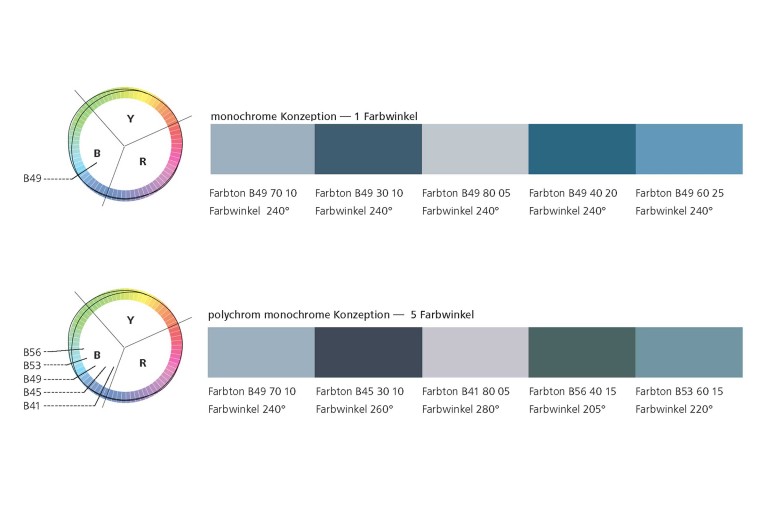
Die beiden dargestellten Beispiele monochromer und polychrom monochromer Kompositionen verdeutlichen den Unterschied der beiden gestalterischen Ansätze.
Monochrom: zeigt Farbtöne mit Unterschieden in Helligkeit und Chroma aus einem Farbtonbereich.
Polychrom monochrom: zeigt Farbtöne mit Unterschieden in Helligkeit und Chroma aus mehreren, direkt benachbarten Farbtonbereichen.
Im Ergebnis zeigt die zweite Variante das etwas breitere Farbspektrum – von rötlichen bis grünlichen Nuancen.
Starke Werkzeuge für ein starkes Farbsystem
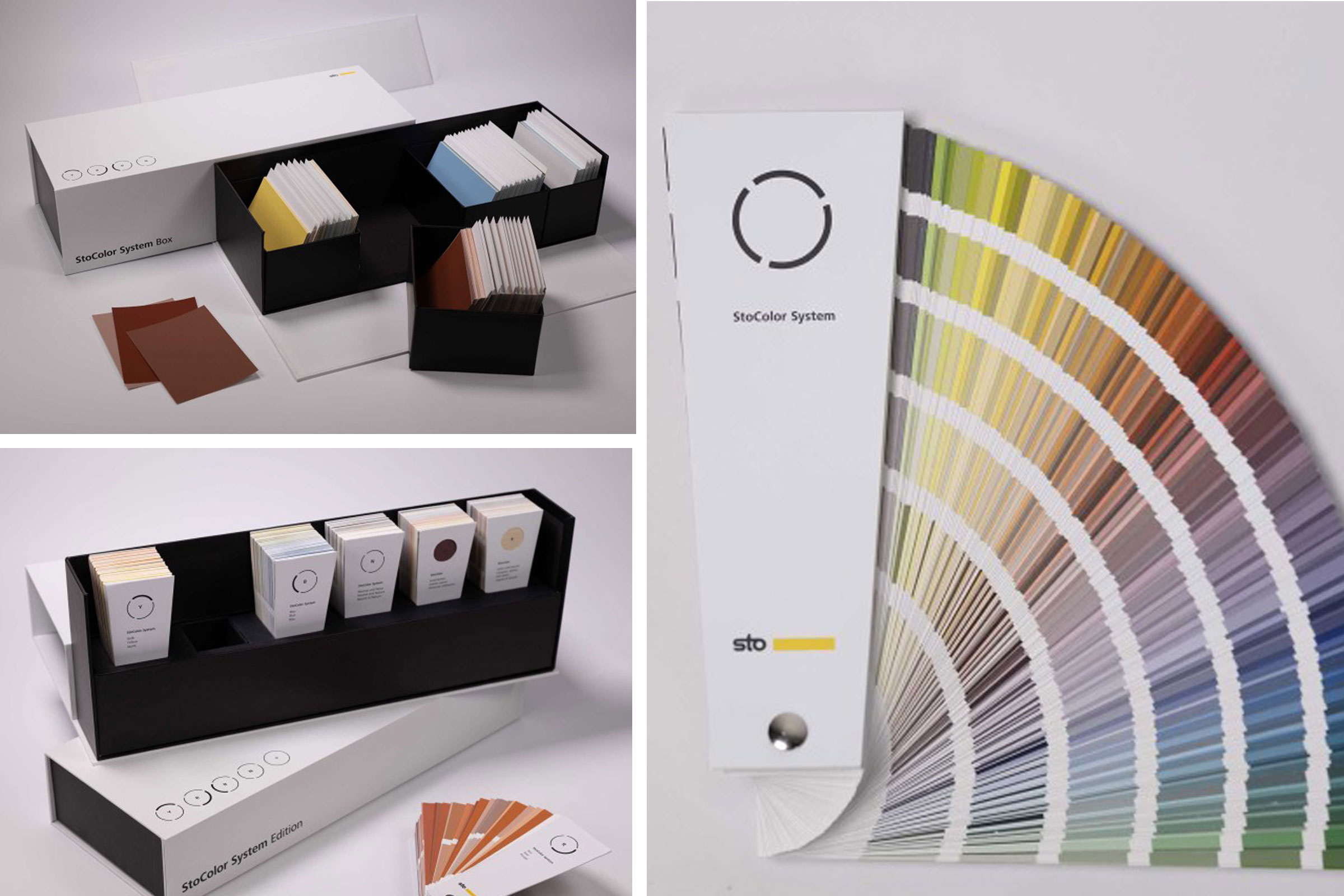
Eine harmonische Farbgestaltung ist keine Sache des Zufalls. Mit dem passenden Werkzeug und durchdachten Medien sind Sie bestens gerüstet auf dem Weg zur gewünschten Farbgestaltung. Unsere drei Medien geben Ihnen die notwendige Sicherheit für die Anwendung. Angefangen vom Farbfächer zum Gesamtsystem über Einzelblätter zu allen Farbtönen bis hin zur Edition mit 6 Einzelfächern.
An den Medien interessiert?
Interessiert an den Medien zu allen Sto-Farbtonkollektionen?
Hier finden Sie eine Übersicht aller Medien und Werkzeuge, z.B.
- StoColor System Fächer Gesamtsystem, Signet dient zur Orientierung und verdeutlicht Zuordnung der jeweiligen Farbtonbereiche.
- StoColor System Edition mit 6 Fächern
- StoColor System Box mit 1.000 Einzelblättern im Format DIN A6
Zu den Farbtonmedien
Noch mehr Vielfalt
Neben dem StoColor System und der Kollektion AC – Architectural Colours bieten wir Ihnen weitere Farbtonkollektionen und -fächer: für kreative Freiheit und eine perfekte Farbgebung in sämtlichen Anwendungsbereichen!
StoColor Metallic Fächer
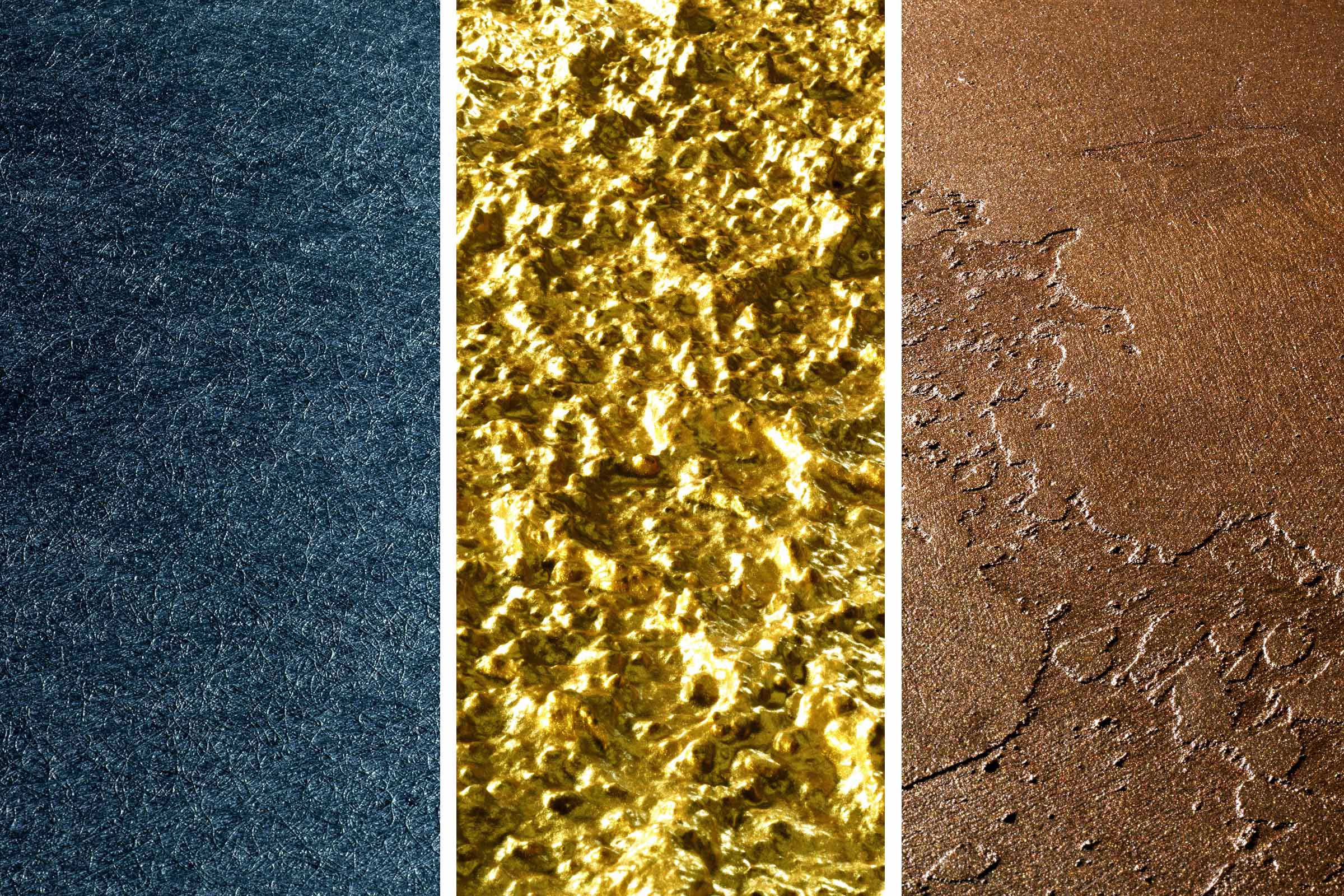
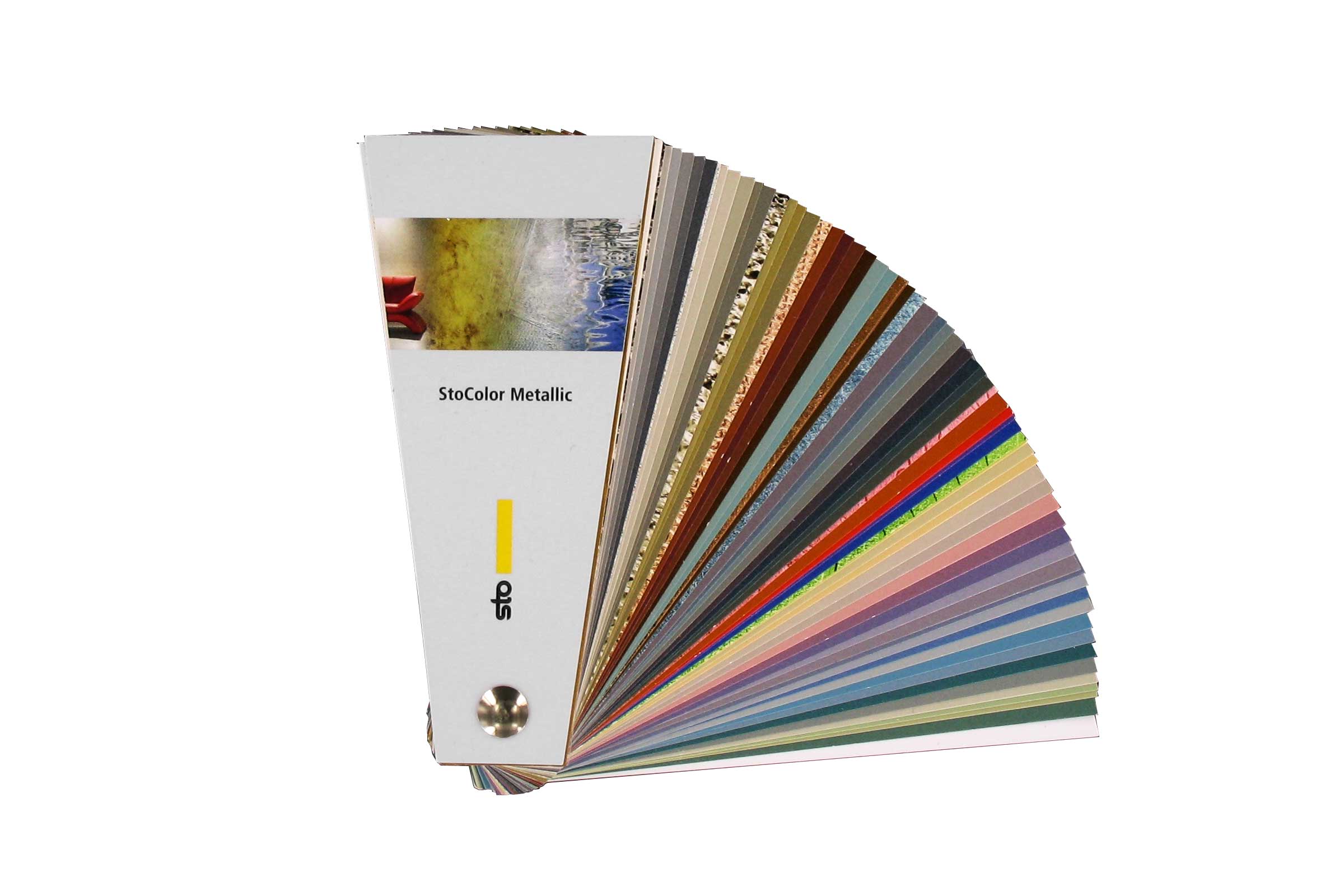
Die StoColor Metallic Kollektion umfasst 60 Farbtöne in 9 Bereichen. StoColor Metallic verleiht den verschiedensten Oberflächen durch metallische Effekte eine besondere Anmutung – innen wie außen.
Lacke-und-Lasuren-Farbtonfächer
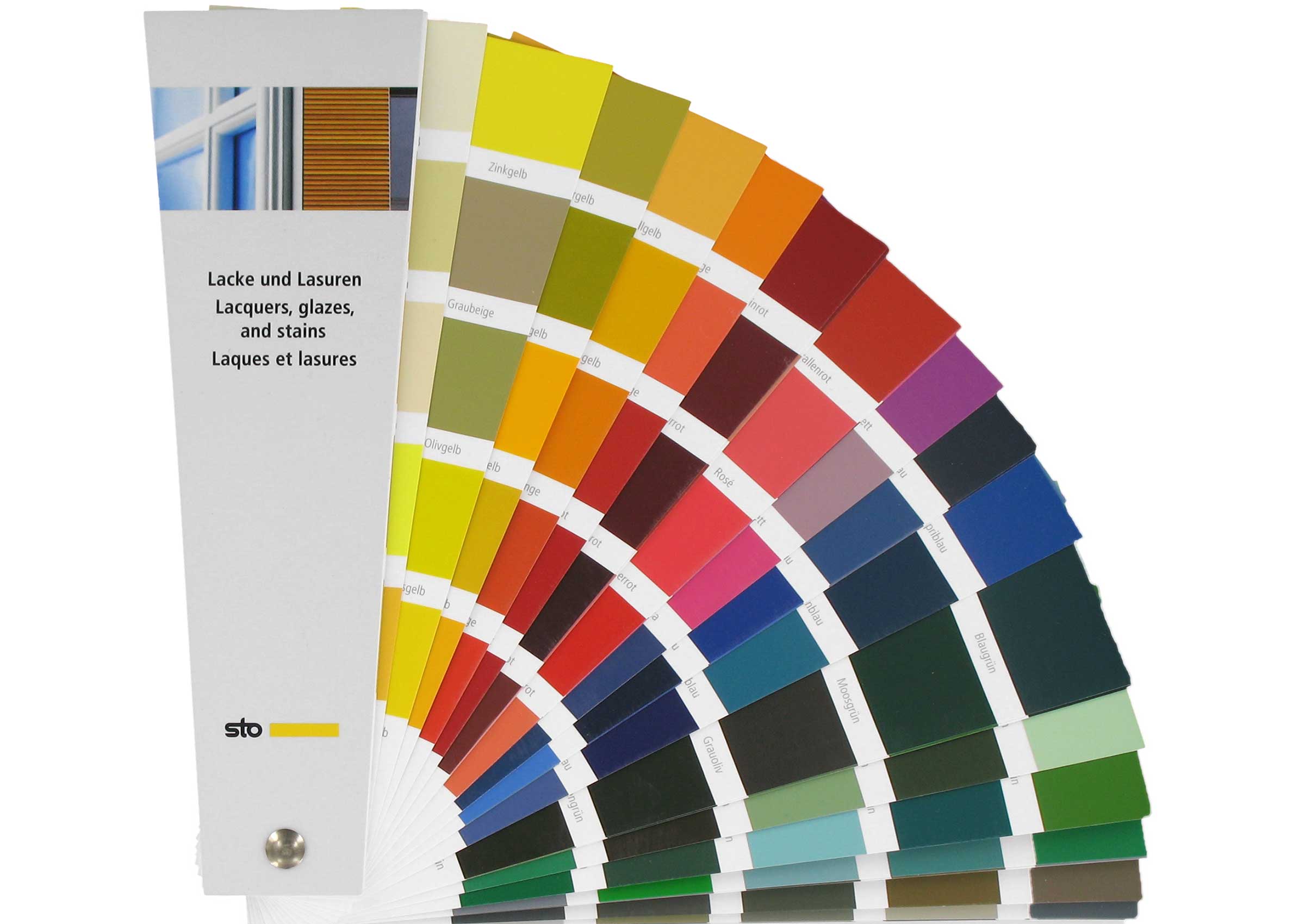
Im Lacke-und-Lasuren-Farbtonfächer finden Sie die passende Lösung für Ihre Anforderung – im Innen- wie Außenbereich, auf Holzflächen und vielen weiteren Untergründen:
- 12 ausgewählte Holzlasuren-Töne
- 192 Lackfarbtöne nach RAL-CLASSIC
- inkl. 14 DB-Farbtöne
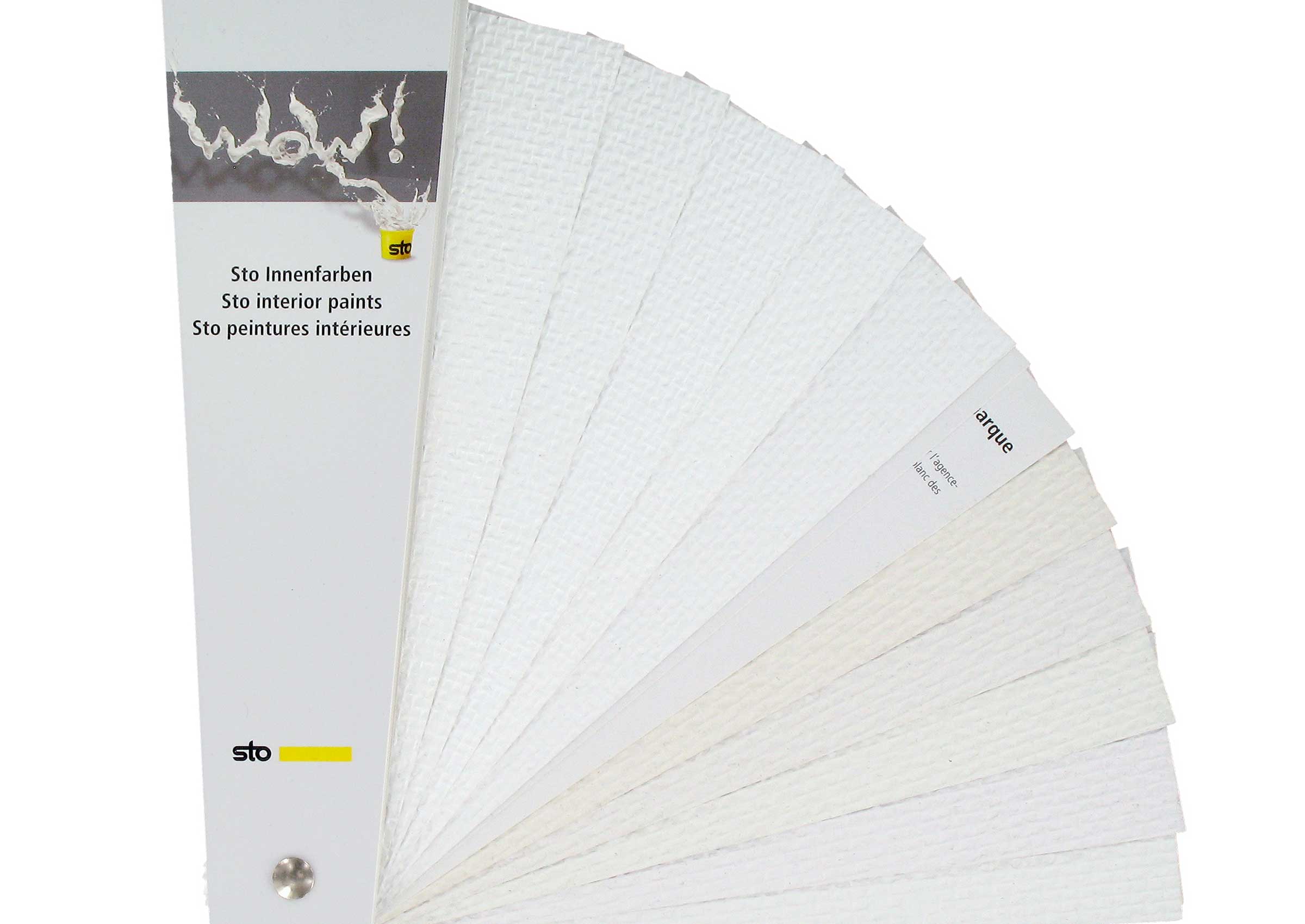
Sto-Innenfarben-Farbtonfächer
Das perfekte Beratungsinstrument: unser Innenfarben-Farbtonfächer:
- Der Fächer bietet einen umfassenden Überblick über die verschiedenen Glanzgrade und Weißtöne des Sto-Innenfarbensortiments.
- Inklusive Echtmuster zu den Glanzgraden und den 5 Innenfarben
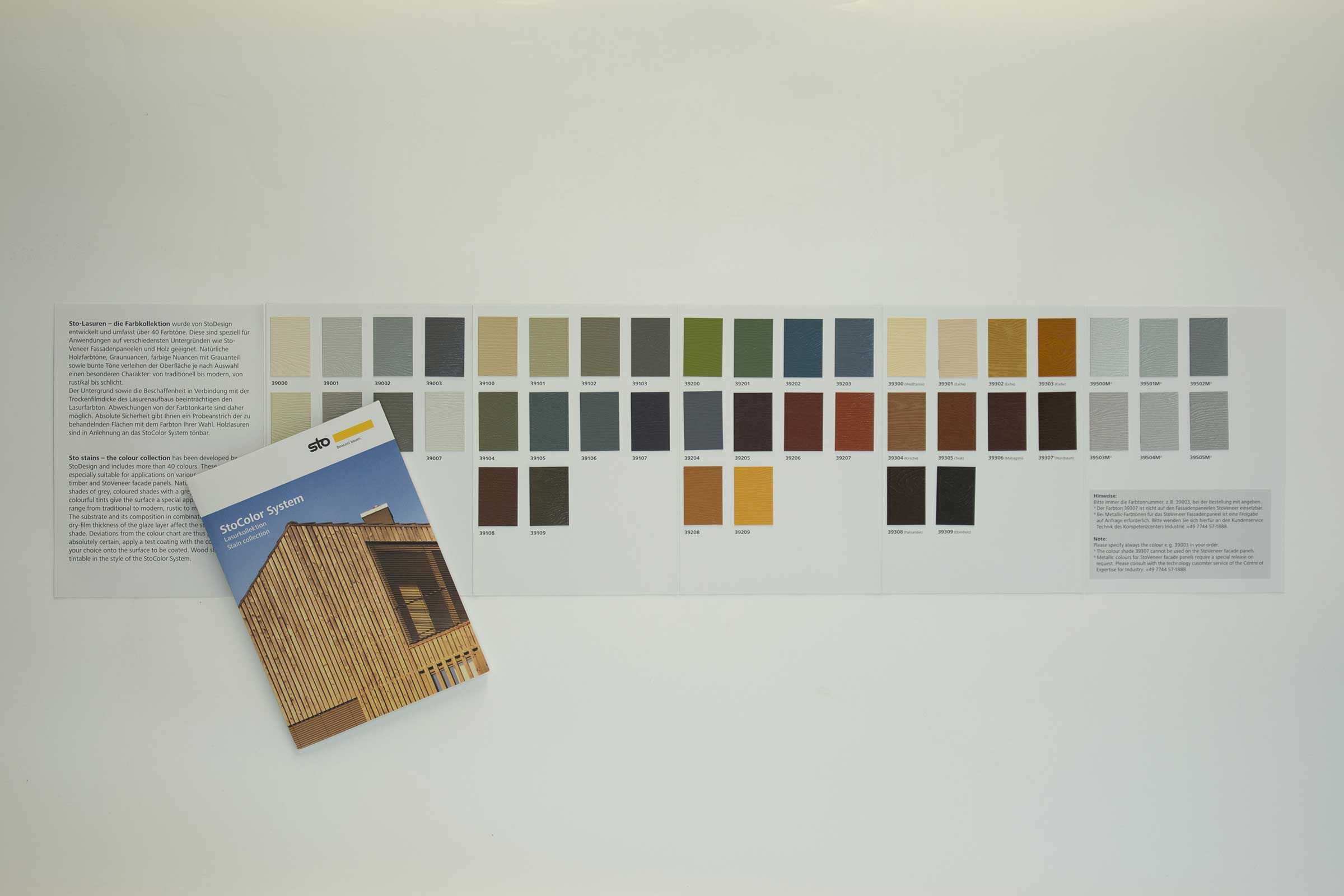
Leporello Sto-Lasurenkollektion
Sto-Lasuren – die Farbkollektion wurde von StoDesign entwickelt und umfasst über 40 Farbtöne. Diese sind speziell für Anwendungen auf verschiedensten Untergründen wie Sto-Veneer Fassadenpaneelen und Holz geeignet.
Metrisches Farbsystem für die Architektur
Das neue StoColor System - über 1400 Farbtöne in einem Farbsystem
72 Basisfarbtöne. Unzählige Möglichkeiten für die Gestaltung – mit 1000 Farbtönen für Fassaden, 225 Innenraum- und über 200 Lack- und Holzlasurtönen. Mit dem neuen StoColor System verleihen Sie Ihren Ideen Leben – präzise und ästhetisch.
1000 neue Farbtöne – unendliche Möglichkeiten
Das neue metrische StoColor System bietet Ihnen maximale Kompositionsmöglichkeiten für die architektonische Gestaltung. Die Basis bildet ein Farbkreis mit 72 Farbtonbereichen. Schöpfen Sie aus einer systematischen Vorauswahl an Farbtönen und beleben Sie Ihre Ideen mit dem neuen Farbsystem: anwenderbezogen, präzise und ästhetisch.
Aus Liebe zum Bauen. Bewusst bauen.
StoColor System – das ist alles drin:
- 1000 neue Farbtöne für die Fassade
- Alle Farbtöne machbar in den Produkten StoColor Maxicryl und StoColor Dryonic
- Großes Plus an weiteren Farbtönen
- 225 Farbtöne für den Innenraum, über 200 Lacktöne, 38 Holzlasurfarbtöne
- Weißtöne
- 24 Weißtöne: natürliche Weiß- und Cremenuancen
- Schwarztöne und neutrale Graureihe
- 6 Schwarztöne, neutrale Graureihe mit 16 Abstufungen
- Trendige Graureihen mit nur 3 % Chroma
- 8 farbige Graureihen mit jeweils 6 Farbtönen, insgesamt 48 Nuancen
- 72 historische Farbtöne
- Zum Beispiel: Französischer Ocker, Rügener Kreide, Ägyptisch Blau ...
Farbtonübersichten als Download
"Weil Farben unsere Leidenschaft sind"
Peter Appenzeller und Antonio Romano sind verantwortlich für das neue StoColor System. Drei Fragen an die Entwickler des Systems:
Warum wurde ein neues Farbsystem entwickelt?
"Wir wollten ein System entwickeln, das über bestehende Farbsysteme hinaus einen deutlichen Nutzen in der Anwendung bietet: Mit einer intelligenten Systematik, die den Nutzern „Rezepte“ für die Komposition von Farbtönen zur Verfügung stellt. Wir zeigen Wege auf, wie man zu diesen individuellen Rezepten kommt. Die Basis bilden ein fein abgestimmter Farbkreis mit 72 Farbtonbereichen und eine systematische Vorauswahl von Farbtönen innerhalb der einzelnen Farbtonbereiche."
Zentrale Fragen zum StoColor System
Was sind die inhaltlichen Besonderheiten?
"Zum einen der konzeptionelle Ansatz: Das StoColor System ist gesamtheitlich und langfristig gedacht. Und natürlich das Gesamtkonzept mit der ganzen Vielfalt, die der Anwender bekommt: 1000 Farbtöne für die Fassade, 225 Farbtöne speziell für Innenräume und weiter 240 Lack- und Lasurfarbtöne. Plus historisch oder kulturell wichtige Farbtöne. Eine echte Besonderheit sind auch die Beratungsmedien. So ist es möglich, mit nur einem Werkzeug ein komplettes Projekt zu gestalten!"
Wie funktioniert das StoColor System?
"Das StoColor System ist aus der Anwendung heraus gedacht. Es gibt den analytisch denkenden Typen. Für ihn sind Abstufungen in Helligkeit und Sättigung der richtige Weg für das passende Rezept. Der emotionale Typ nutzt die Farbfächer aus der praktischen Anwendung heraus. Wir haben uns die Freiheit genommen, innerhalb des methodisch aufgebauten Systems Farbnuancen und Kompositionen hervorzuheben."
Historische Farbtöne im System
Alabasterweiß, Rügener Kreide, Französischer Ocker, Ägyptisch Blau, Englisch Rot oder Terra di Siena. Der Bezug zur kulturellen und gestalterischen Vergangenheit ist in der Arbeit mit Farbe elementar. Der ideelle Wert dieser Farbtöne bleibt auch losgelöst von der Herstellung des ursprünglichen Farbstoffes aus natürlichen Rohstoffen bestehen. Um die kulturelle Tradition dieser Farbtöne fortzuführen, beinhaltet das neue StoColor System 72 historisch relevante sowie materialbezogene Farbtöne.
Broschüre als Download
Aufbau und Farbsystematik
Ein sehr fein abgestufter Farbkreis bildet die Basis des neuen Farbsystems. Er umfasst 72 Farbtonbereiche – ausgehend von den drei Primärfarben Gelb, Rot und Blau. Gestalten Sie individuelle Kompositionen. Eine gezielte Auswahl an Farbtönen je Farbtonbereich unterstützt Sie dabei.
Im neuen StoColor System ist die Position von Farbtönen im dreidimensionalen Farbraum präzise definiert. Und zwar über die Parameter Farbton, Helligkeit und Chroma. Das Farbsystem gliedert den Farbkreis in geringerem Abstand von nur 5 Grad in 72 Farbtonbereiche. Ein großer Vorteil gegenüber anderen metrischen Systemen. Das bedeutet für sie in der Praxis: Sehr fein nuancierte Kompositionen von Farbtönen mit geringen Farbtonunterschieden sind möglich.
Farbtöne direkt benachbarter Farbtonbereiche weisen zusätzlich einen bewussten Versatz von Helligkeit und Chroma auf und ergänzen sich somit optimal.
Von der Theorie zur Anwendung
Die Anwendung von Farbe im städtebaulichen Kontext muss auf eine langfristige Gültigkeit abzielen. Das neue StoColor System ermöglicht es Ihnen, Ihre Konzeptideen zu verwirklichen. Von der Entwicklung der spezifischen Kompositionen bis zur Umsetzung in verschiedene Fassadenmaterialien.
Gute Konzepte zeichnen sich durch die Planung und Steuerung der Farbwirkung aus. Textur und Schattenwurf oder verschiedene Glanzgrade verändern die ästhetische Wirkung sowie die Wahrnehmung des Farbtones selbst. Dies betrifft Farbton, Helligkeit und Chroma. Entscheidungen können nur mit Echtmustern sicher getroffen werden.
Die Komposition macht den Unterschied
Die beiden dargestellten Beispiele monochromer und polychrom monochromer Kompositionen verdeutlichen den Unterschied der beiden gestalterischen Ansätze.
Monochrom: zeigt Farbtöne mit Unterschieden in Helligkeit und Chroma aus einem Farbtonbereich.
Polychrom monochrom: zeigt Farbtöne mit Unterschieden in Helligkeit und Chroma aus mehreren, direkt benachbarten Farbtonbereichen.
Im Ergebnis zeigt die zweite Variante das etwas breitere Farbspektrum – von rötlichen bis grünlichen Nuancen.
Starke Werkzeuge für ein starkes Farbsystem
Eine harmonische Farbgestaltung ist keine Sache des Zufalls. Mit dem passenden Werkzeug und durchdachten Medien sind Sie bestens gerüstet auf dem Weg zur gewünschten Farbgestaltung. Unsere drei Medien geben Ihnen die notwendige Sicherheit für die Anwendung. Angefangen vom Farbfächer zum Gesamtsystem über Einzelblätter zu allen Farbtönen bis hin zur Edition mit 6 Einzelfächern.
An den Medien interessiert?
Interessiert an den Medien zu allen Sto-Farbtonkollektionen?
Hier finden Sie eine Übersicht aller Medien und Werkzeuge, z.B.
- StoColor System Fächer Gesamtsystem, Signet dient zur Orientierung und verdeutlicht Zuordnung der jeweiligen Farbtonbereiche.
- StoColor System Edition mit 6 Fächern
- StoColor System Box mit 1.000 Einzelblättern im Format DIN A6
Zu den Farbtonmedien
Noch mehr Vielfalt
Neben dem StoColor System und der Kollektion AC – Architectural Colours bieten wir Ihnen weitere Farbtonkollektionen und -fächer: für kreative Freiheit und eine perfekte Farbgebung in sämtlichen Anwendungsbereichen!
StoColor Metallic Fächer
Die StoColor Metallic Kollektion umfasst 60 Farbtöne in 9 Bereichen. StoColor Metallic verleiht den verschiedensten Oberflächen durch metallische Effekte eine besondere Anmutung – innen wie außen.
Lacke-und-Lasuren-Farbtonfächer
Im Lacke-und-Lasuren-Farbtonfächer finden Sie die passende Lösung für Ihre Anforderung – im Innen- wie Außenbereich, auf Holzflächen und vielen weiteren Untergründen:
- 12 ausgewählte Holzlasuren-Töne
- 192 Lackfarbtöne nach RAL-CLASSIC
- inkl. 14 DB-Farbtöne
Sto-Innenfarben-Farbtonfächer
Das perfekte Beratungsinstrument: unser Innenfarben-Farbtonfächer:
- Der Fächer bietet einen umfassenden Überblick über die verschiedenen Glanzgrade und Weißtöne des Sto-Innenfarbensortiments.
- Inklusive Echtmuster zu den Glanzgraden und den 5 Innenfarben
Leporello Sto-Lasurenkollektion
Sto-Lasuren – die Farbkollektion wurde von StoDesign entwickelt und umfasst über 40 Farbtöne. Diese sind speziell für Anwendungen auf verschiedensten Untergründen wie Sto-Veneer Fassadenpaneelen und Holz geeignet.