
Mariendom Neviges, Velbert, DE
_W2400xH0.webp)
- Completed
- 2018
- Architecture
- Peter Böhm Architekten, Köln, DE
- Specialised trade
- TORKRET GmbH, Essen, DE
- Building owners
- Katholische Kirchengemeinde Maria, Königin des Friedens, Velbert, DE
- Sto proficiency
- StoCrete FS, Carbongewebe solidian Q90-CEP-21 mit abgesandeter Oberfläche, StoCrete TS 100, StoCryl HC 100
- Photos
- TORKRET GmbH, Essen, DE und Dipl.-Ing. Sergej Rempel und Natascha Stockhausen und Martin Baitinger
Carbon-reinforced mortar layer makes cracks harmless
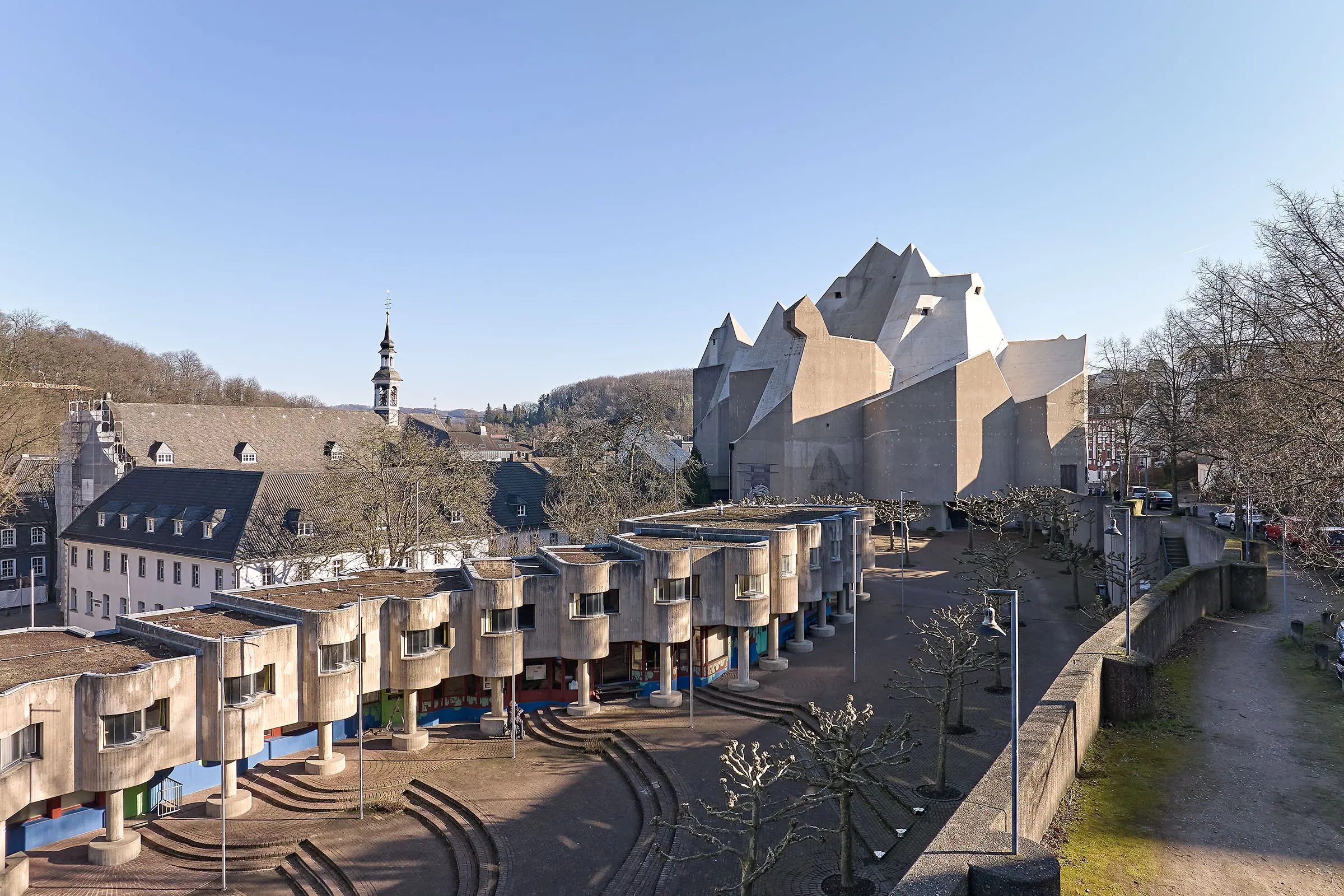
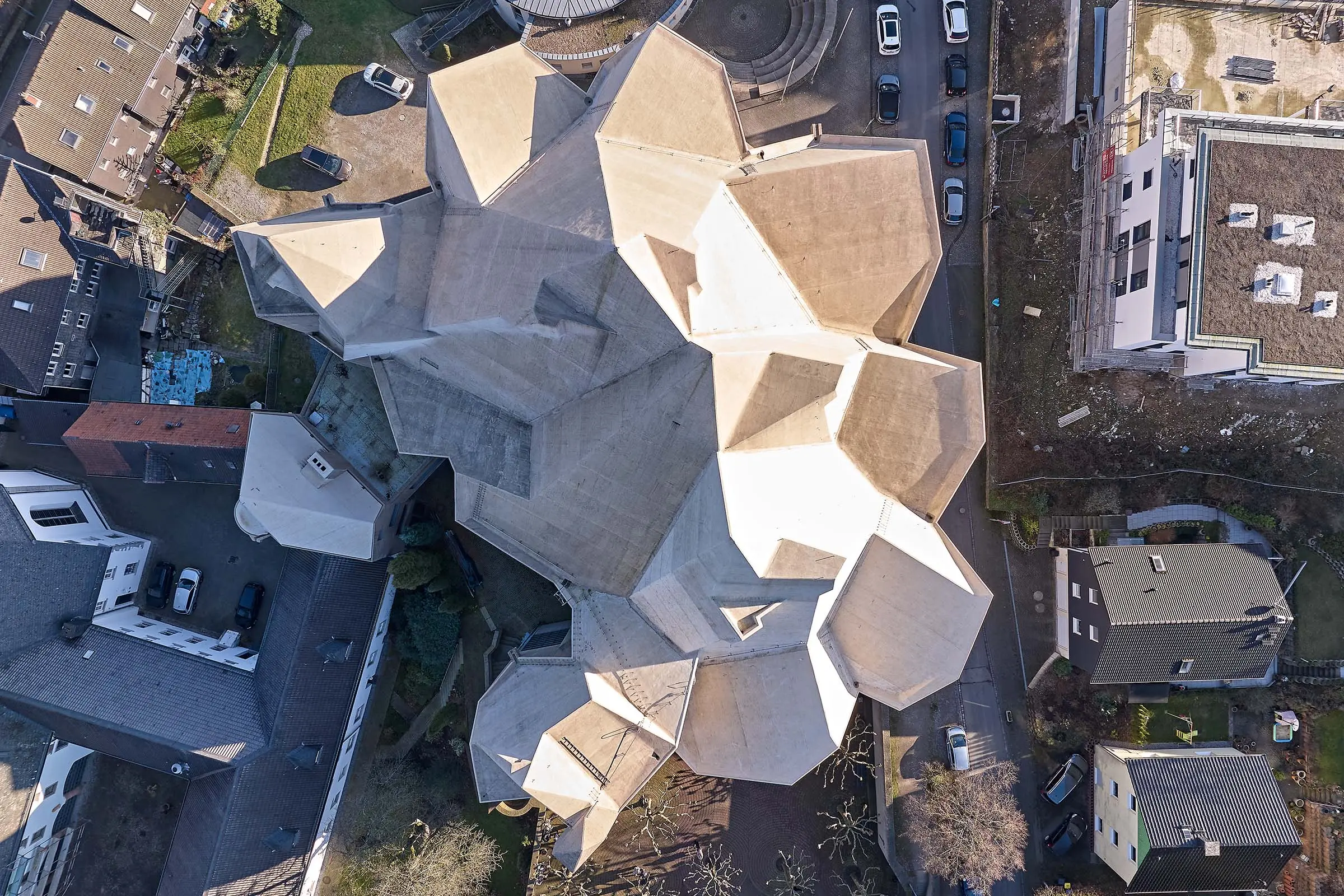
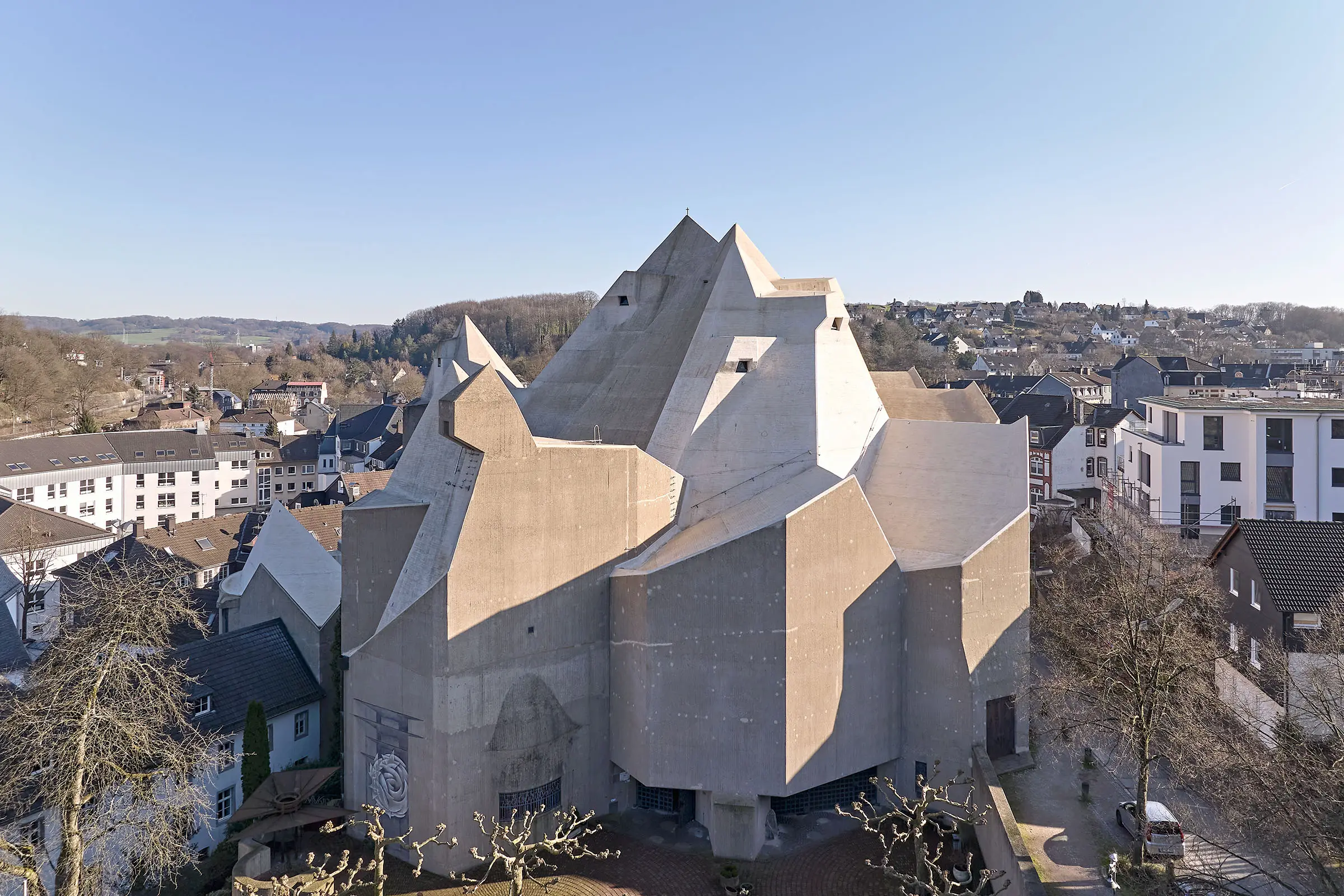
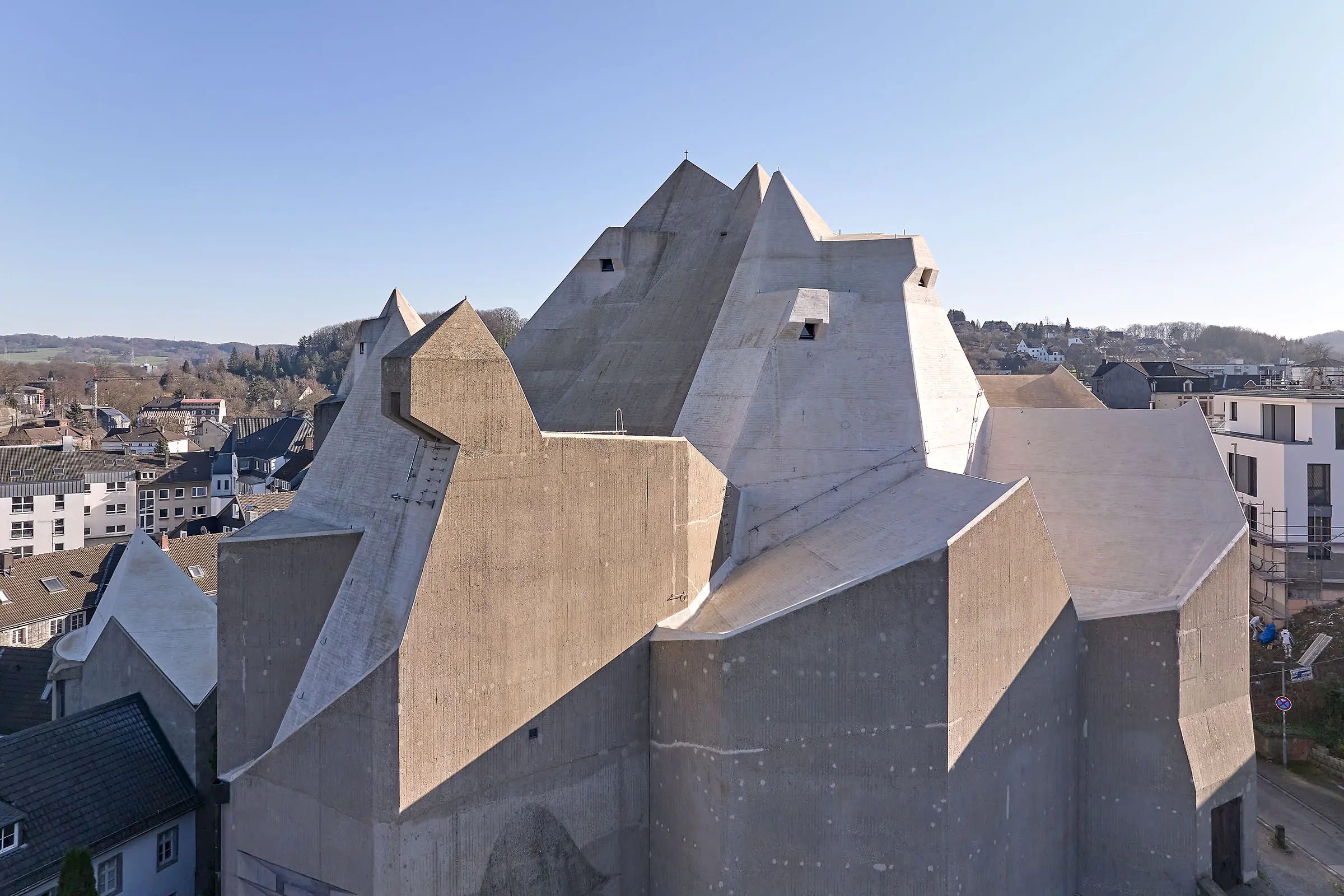
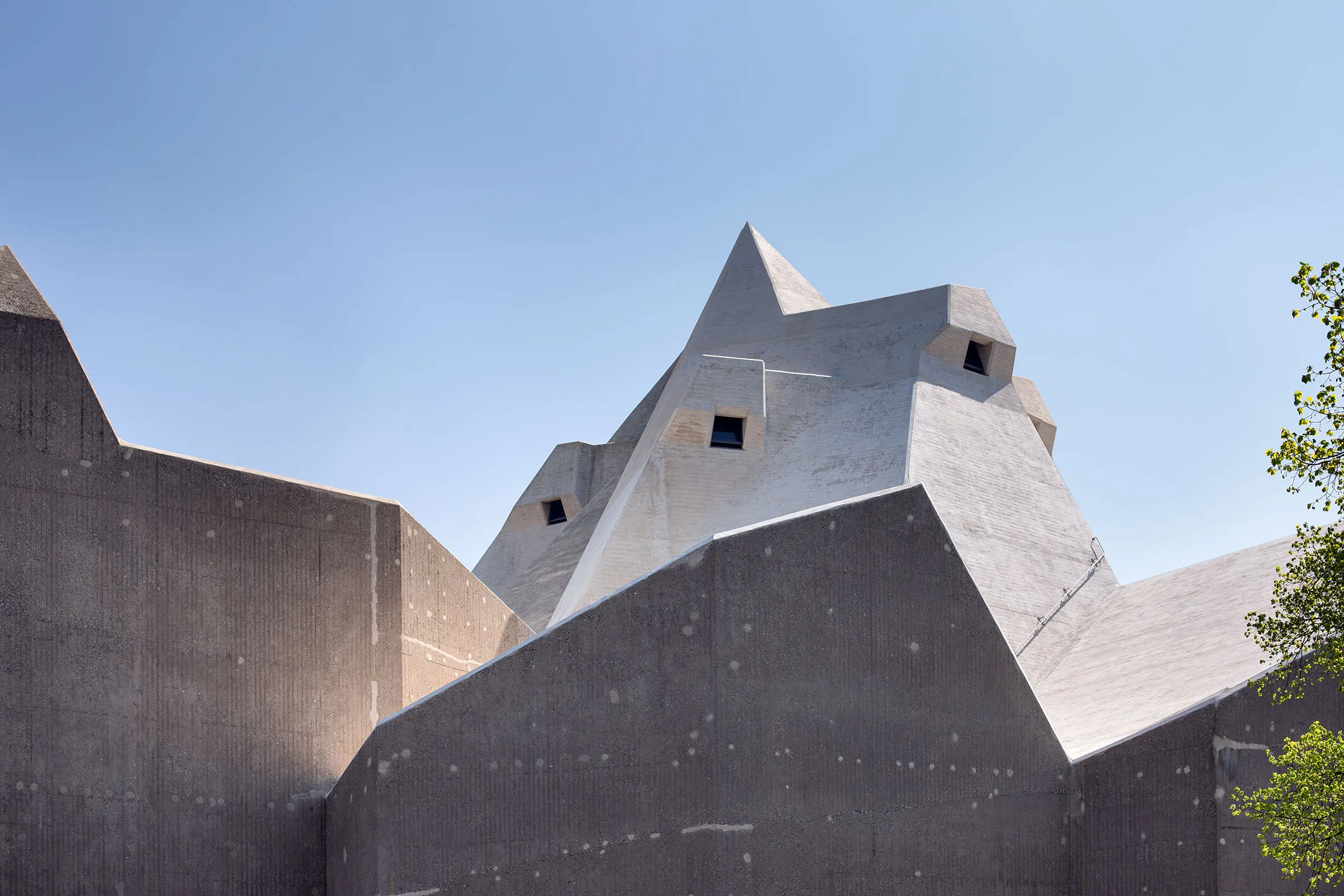
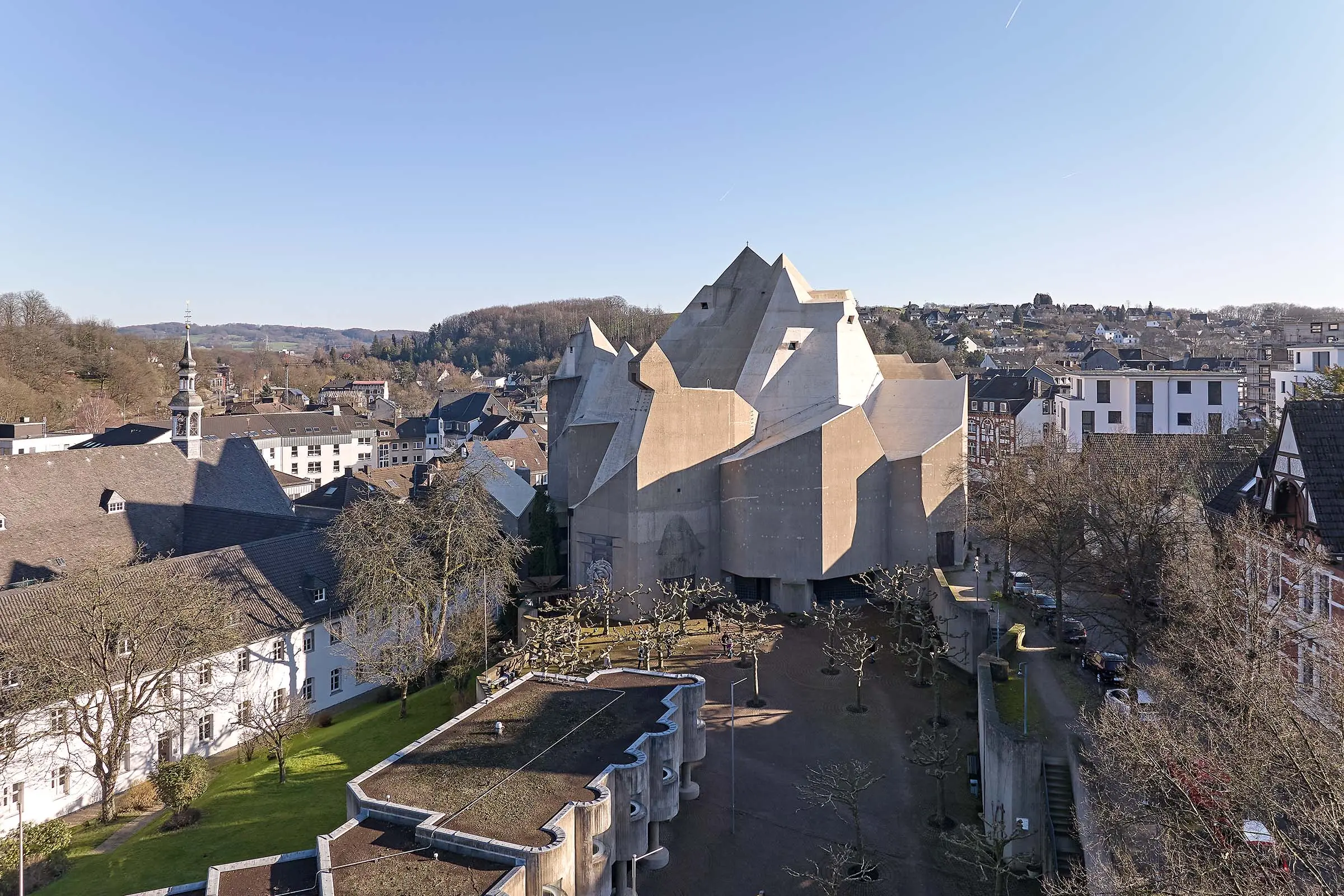
The pilgrimage church “Maria, Queen of Peace” in Velbert-Neviges, North Rhine-Westphalia in Germany, was built in 1968. Its roof is a folded structure made of reinforced concrete with various sloping concrete surfaces, spikes and edges. Exact static calculations were not possible at the time due to the monolithic and complicated construction. Stresses in the construction could therefore only be estimated. The actual stress progression gradually became apparent in the form of cracks and separation cracks, some of which allowed rainwater to penetrate the structure. The cracks occurred particularly in the fillet areas, the transitions from the walls to the folded roof, in corner areas with complex design and on the flat roof surfaces.
The thermally caused cyclic crack expansion made it impossible to grout the cracks. Therefore, a completely new renovation concept had to be developed. The aim was the waterproofing of the reinforced concrete roof to ensure the long-term security of this sacral building. The investor also demanded that both the original formwork board structure on the surface and the colour appearance of the old concrete be preserved.
System solution guarantees permanent waterproofing
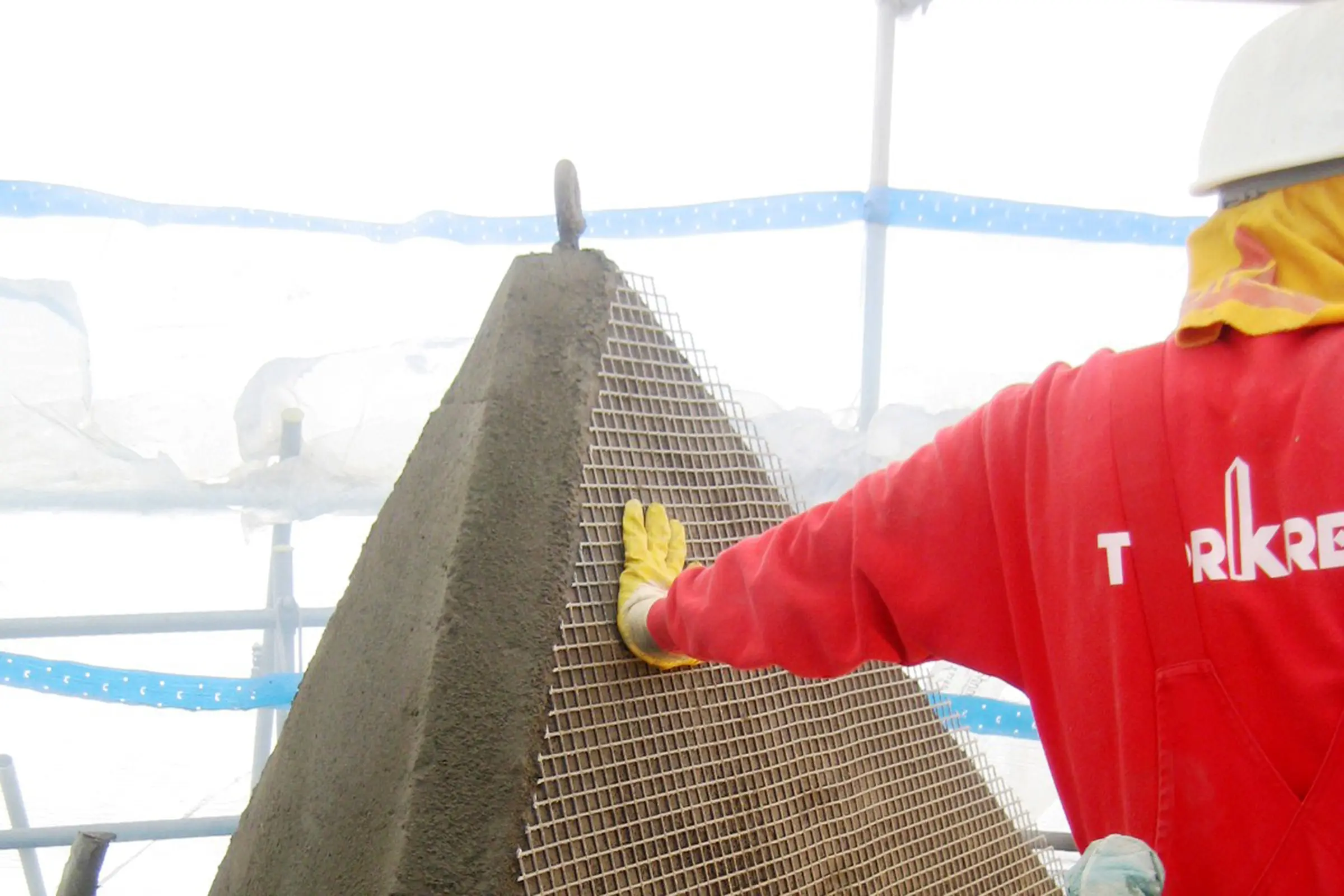
The solution is a sophisticated, area-dependent system consisting of a high-quality polymer-modified spray mortar, a carbon fabric to reinforce the spray mortar layer and a special dedonding material that locally prevents the spray mortar from adhering to the concrete of the structure.
Download the full project report | PDF 1,4 MB